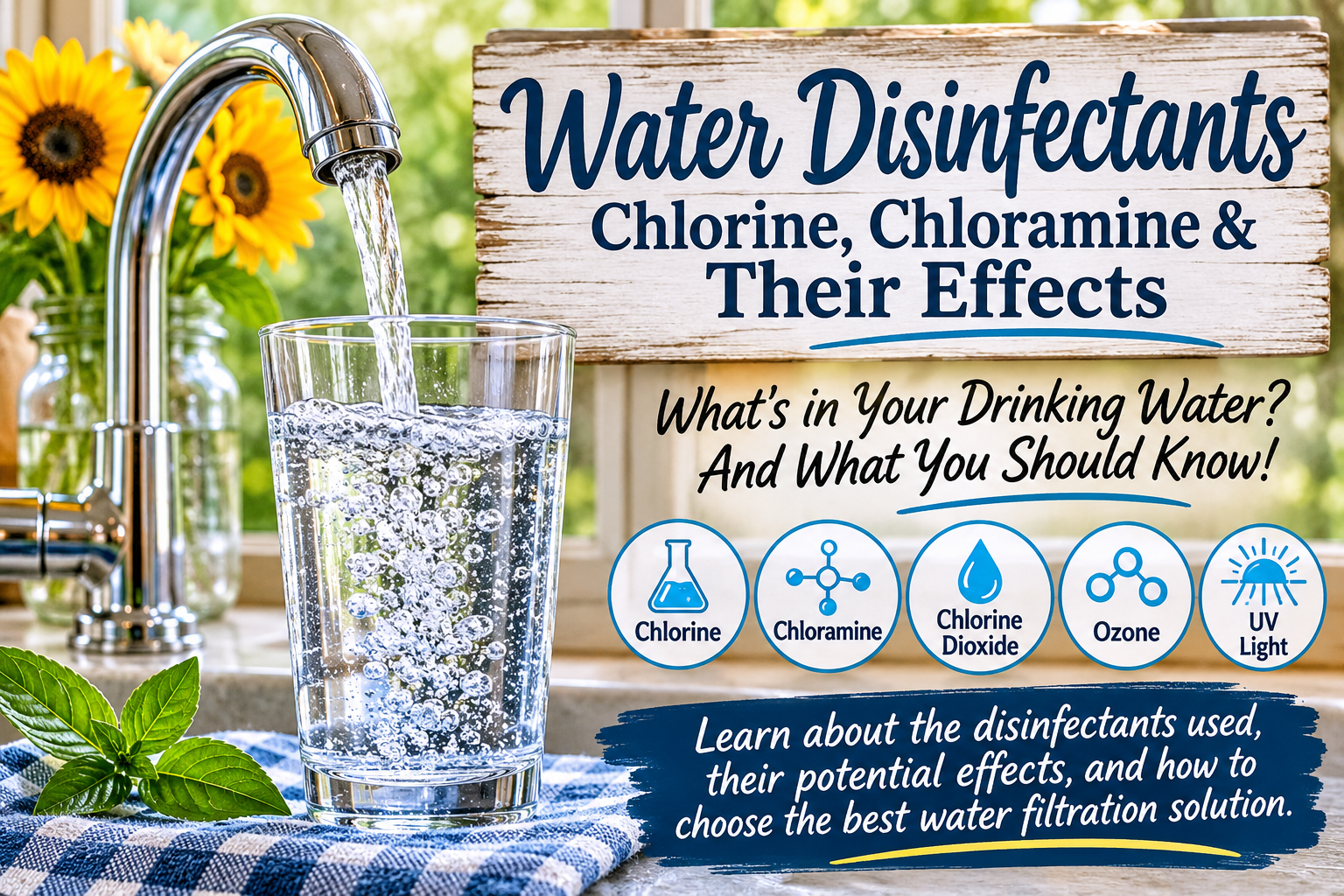

When you turn on your kitchen faucet, you expect the water to be safe to drink. But before municipal water reaches your home, it often undergoes several treatment processes designed to remove contaminants, kill harmful microorganisms, and prevent disease.
One of the most important steps in public water treatment is disinfection. Disinfectants are used to destroy or inactivate bacteria, viruses, and other disease-causing organisms that could make people sick.
While water disinfection has been one of the greatest public health achievements in modern history, it also raises questions about the chemicals used, their byproducts, their potential effects, and what happens when treated water travels through miles of pipes before reaching your home.
This article takes a closer look at the disinfectants commonly used in drinking water, why they’re used, and what consumers should know.
1. Chlorine: The Most Common Drinking Water Disinfectant
Chlorine is one of the most widely used disinfectants in municipal water systems throughout the United States. It has been used in drinking water treatment for more than a century, helping dramatically reduce waterborne diseases such as cholera, typhoid, and dysentery.
Water treatment plants may add chlorine in the form of chlorine gas, sodium hypochlorite (liquid bleach), or calcium hypochlorite.
Why chlorine is used
- Kills or inactivates many harmful bacteria and viruses.
- Helps protect drinking water against microbial contamination.
- Provides a disinfectant residual that can remain in water as it travels through distribution pipes.
- Is relatively inexpensive and effective for large-scale water treatment.
Potential effects of chlorine
Chlorine is effective at protecting drinking water, but it can affect water’s taste and smell. Some people notice a swimming-pool-like odor or taste, particularly when chlorine levels or other water conditions make it more noticeable.
At regulated drinking-water levels, chlorine is generally considered safe for drinking. However, chlorine can react with naturally occurring organic material in water, producing chemicals known as disinfection byproducts.
These byproducts are an important part of the drinking-water conversation because the disinfectant itself isn’t the only chemical consumers may encounter.
2. Chloramine: A Longer-Lasting Disinfectant
Many water utilities use chloramine instead of chlorine for their secondary disinfection process. Chloramine is usually made by combining chlorine and ammonia, producing monochloramine.
The primary reason utilities use chloramine is that it lasts longer in water than chlorine. This allows it to maintain disinfectant protection as water moves through miles of distribution pipes.
Why water utilities use chloramine
- Provides a longer-lasting disinfectant residual.
- Helps control microbial growth throughout the distribution system.
- Generally forms lower amounts of certain disinfection byproducts than chlorine.
- Can help utilities meet drinking-water disinfection byproduct regulations.
Potential effects of chloramine
Chloramine can affect the taste and smell of drinking water. Some people describe it as chemical-like, musty, or different from water disinfected with chlorine.
Chloramine can also affect the chemistry of water inside plumbing systems, potentially influencing lead and copper release under certain conditions. Utilities are required to manage corrosion control, particularly when changing disinfectants.
Chloramine is not removed simply by letting water sit uncovered. Unlike free chlorine, it is more stable and generally requires an appropriate treatment method for removal.
EPA explains that chloraminated water meeting regulatory standards is considered safe for drinking, cooking, bathing, and normal household use. US EPA+1
3. Chlorine Dioxide: An Alternative Disinfectant
Chlorine dioxide is another chemical used by some water treatment facilities. It is a powerful oxidizing agent that can be effective against a variety of microorganisms and can also help address certain taste, odor, and water quality problems.
Why chlorine dioxide is used
- Effective against many microorganisms.
- Can help control taste and odor problems.
- Can oxidize certain contaminants during treatment.
- Can be used as an alternative to conventional chlorine treatment in some applications.
Potential effects of chlorine dioxide
Chlorine dioxide treatment can produce byproducts, particularly chlorite and chlorate. Chlorite is regulated in drinking water because elevated exposure can cause health concerns, including anemia and potential nervous system effects in infants and young children.
EPA regulates chlorine dioxide in drinking water at a maximum residual disinfectant level of 0.8 mg/L. The chlorite maximum contaminant level is 1.0 mg/L. US EPA+1
4. Ozone: Powerful Disinfection Without a Long-Lasting Residual
Ozone is a highly reactive gas used by some water treatment facilities to disinfect water and oxidize certain contaminants.
Unlike chlorine and chloramine, ozone does not leave a lasting disinfectant residual in the distribution system. For this reason, water utilities that use ozone may still need to add chlorine or chloramine to protect water as it travels through pipes.
Benefits of ozone treatment
- Powerful oxidation and disinfection.
- Can help control certain taste and odor problems.
- Can be effective against a broad range of microorganisms.
- Can reduce the formation of some chlorine-related disinfection byproducts when used as part of a treatment process.
Potential effects of ozone
Ozone itself is short-lived in water, but it can create byproducts. One important byproduct is bromate, which can form when ozone reacts with bromide naturally present in the source water.
Bromate is regulated because exposure above permitted levels can increase health risks, including cancer risk.
Ozone is an effective treatment tool, but like other disinfectants, it must be carefully managed to balance microbial protection and chemical byproduct formation. Washington State Department of Health+1
5. Ultraviolet (UV) Light: Disinfection Without Adding Chemicals
Ultraviolet light is a different approach to water disinfection. Rather than adding chemicals, UV light exposes water to a specific wavelength of ultraviolet radiation that damages microorganisms and prevents them from reproducing.
UV treatment can be used in municipal facilities, private wells, commercial systems, and point-of-use drinking water systems.
Benefits of UV disinfection
- Doesn’t require adding chlorine or chloramine.
- Can inactivate many bacteria, viruses, and protozoa when properly designed and operated.
- Doesn’t create the same chlorine-related disinfection byproducts.
- Doesn’t change water taste in the same way chemical disinfectants can.
Limitations of UV
UV doesn’t leave a protective disinfectant residual in water. Once treated water enters pipes, it can potentially become contaminated again if the plumbing or storage system is compromised.
UV also doesn’t remove chemical contaminants such as lead, PFAS, pesticides, pharmaceuticals, or dissolved minerals. It is a disinfection technology, not a comprehensive chemical filtration system.
UV is an excellent technology for microbial treatment when properly installed and maintained, but it serves a different purpose from a drinking water filter designed to reduce chemical contaminants.
What Are Disinfection Byproducts (DBPs)?
Disinfection byproducts, commonly referred to as DBPs, are chemicals that can form when disinfectants react with naturally occurring substances in water.
Source water may contain decaying vegetation, organic matter, algae, bromide, and other materials. When disinfectants are added, chemical reactions can occur that produce unwanted compounds.
This means that while disinfection helps protect us from harmful microorganisms, it can also create additional chemicals that water treatment plants must monitor and control.
Common disinfection byproducts
| Byproduct | How it can form | Potential health concerns |
|---|---|---|
| Trihalomethanes (THMs) | Chlorine reacts with natural organic matter | Certain THMs are associated with increased cancer risk and other health concerns with long-term exposure |
| Haloacetic acids (HAAs) | Chemical reactions involving disinfectants and organic matter | Certain HAAs are associated with increased cancer risk |
| Bromate | Can form during ozone treatment when bromide is present | Increased cancer risk at elevated exposure |
| Chlorite | Can form during chlorine dioxide treatment | Anemia and potential nervous system effects in infants and young children |
The EPA regulates several groups of disinfection byproducts in public drinking water. The federal limits include 0.080 mg/L for total trihalomethanes (TTHMs) and 0.060 mg/L for HAA5. US EPA+1
These regulations are intended to reduce exposure while allowing utilities to maintain the disinfection necessary to prevent waterborne illness.
Does Disinfected Tap Water Mean Your Water Is Unsafe?
No. This is an important distinction.
Municipal water disinfection has dramatically improved public health and protects millions of people from serious waterborne illnesses. Chlorine and chloramine levels maintained within regulatory limits are considered safe for normal household use.
However, safe according to drinking water regulations doesn’t necessarily mean your water is free from every contaminant.
Disinfection is primarily intended to control microorganisms. It is not designed to remove every chemical, heavy metal, emerging contaminant, or disinfection byproduct that may be present in your water.
Your water may still contain trace amounts of:
- Disinfection byproducts
- Lead or copper from plumbing
- PFAS, also known as forever chemicals
- Pesticide and herbicide residues
- Pharmaceutical compounds
- Other contaminants that may not be routinely monitored at your individual tap
The quality of water leaving a treatment plant can also differ from the quality of water coming out of your faucet because water travels through distribution systems, service lines, household plumbing, and sometimes aging pipes.
That’s why understanding your water quality report—and considering additional filtration at the point of use—can be an important step toward improving the water your family drinks.
How Can You Reduce Disinfectants and Their Byproducts at Home?
If you notice chlorine taste or odor in your tap water, or simply want an additional layer of protection, a properly selected drinking water filtration system may help.
Different filtration technologies work differently. Some reduce chlorine and improve taste, while others are designed and tested to reduce specific contaminants, including certain disinfection byproducts.
What to look for in a drinking water filter
When shopping for a home drinking water filter, don’t just look at marketing claims. Look for:
- Independent testing and certification – Check whether the system is certified to an applicable NSF/ANSI standard for the specific contaminant reduction claim.
- Chlorine reduction – If taste and odor are a concern, look for verified chlorine reduction performance.
- Disinfection byproduct reduction – Investigate whether the system has verified reduction claims for contaminants such as TTHMs or haloacetic acids.
- Chemical contaminant reduction – Consider additional concerns such as lead, PFAS, pesticides, and other contaminants relevant to your water supply.
- Filter replacement requirements – A filter is only effective when properly maintained and replaced according to its instructions.
- Your water source – Municipal water and private well water have different treatment needs.
Not every filter removes every contaminant. A filter’s capabilities should be verified against its specific certification and performance documentation.
Why I Recommend Multipure Drinking Water Filtration
At Indiana Water Filters, I believe your family deserves to know what’s in the water coming out of your faucet—and have the opportunity to make an informed decision about it.
That’s why I recommend Multipure drinking water systems.
Multipure uses solid carbon block filtration technology, and its systems have independently verified contaminant reduction claims depending on the specific model and certification. The goal is to reduce unwanted contaminants while keeping drinking water convenient and accessible right in your own kitchen.
If you are concerned about chlorine, chemical taste and odor, or other contaminants found in drinking water, a properly selected Multipure system may be worth considering.
I don’t believe you should have to rely on bottled water to feel more confident about what you drink every day. A quality home filtration system is a practical way to take a closer look at your drinking water and make a choice that fits your household.
Take a closer look at your drinking water
Explore Multipure drinking water filtration systems and find an option that fits your home, your water concerns, and your budget.Explore Multipure Systems & Special OffersShop through my personal link to explore available products and offers.
The Bottom Line: Disinfection Protects Us, but Water Quality Doesn’t Stop at the Treatment Plant
Disinfectants such as chlorine, chloramine, chlorine dioxide, ozone, and ultraviolet light play an important role in protecting public health. Without proper disinfection, drinking water could carry dangerous microorganisms capable of causing serious disease.
But disinfection is only one part of water treatment.
Some disinfectants can react with naturally occurring materials to form byproducts. Other contaminants can enter water through source water, distribution systems, or household plumbing. And water quality can vary depending on where you live and the condition of your local infrastructure.
The best approach isn’t to fear your tap water. It’s to understand it.
Read your local water quality report, learn which disinfectant your utility uses, understand what contaminants are monitored, and consider additional drinking water filtration if you want another layer of protection.
Clean water shouldn’t be something you have to wonder about. It should be something you feel confident drinking every day.