
Most people in Indiana trust that when they turn on the tap, their water has already been cleaned and treated. And it has—public water utilities across the state follow a detailed process to meet safety standards set by the EPA and the Indiana Department of Environmental Management (IDEM). But here’s the truth: even after treatment, many potential contaminants can still make their way into your glass. That’s why more and more Indiana families are choosing to add a Multipure water filtration system for extra protection.
How Indiana’s Public Water is Treated
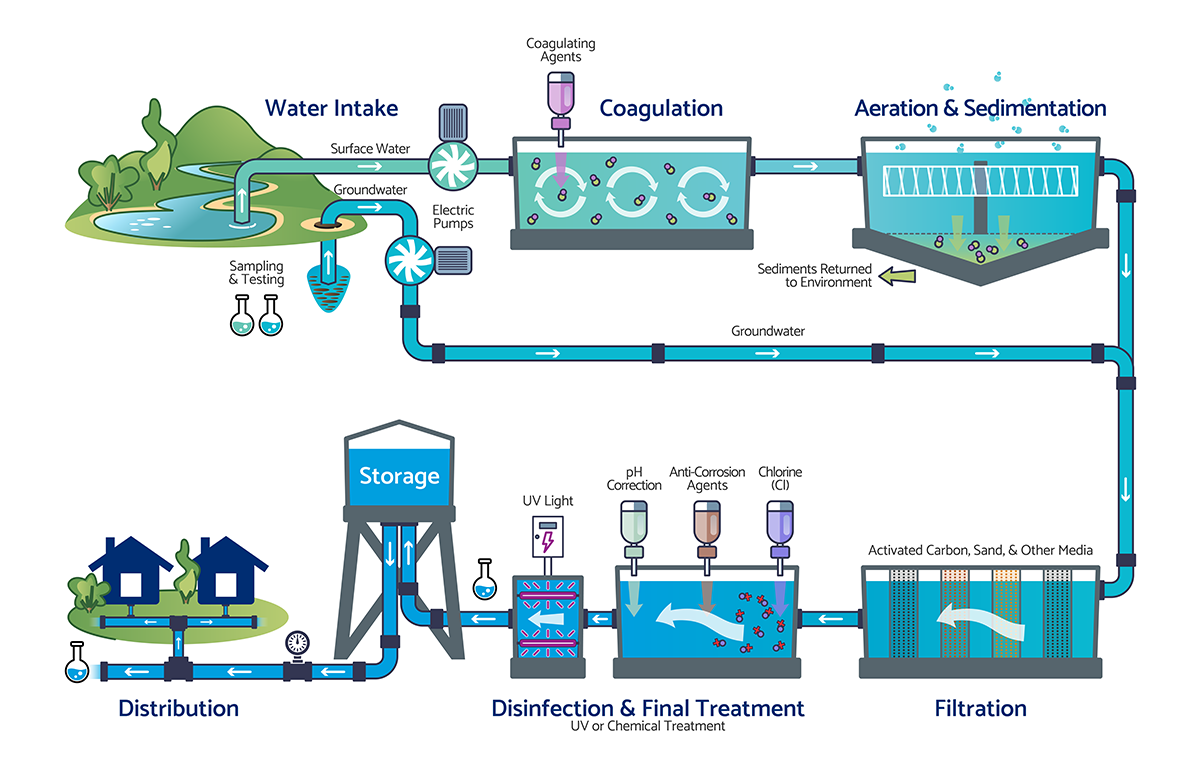
1. Sourcing the Water
Indiana’s drinking water comes from rivers, lakes, reservoirs, and underground aquifers. These sources are regularly tested, but they can still contain pollutants like pesticides, fertilizers, lead, and even industrial runoff.
2. Coagulation & Sedimentation
Chemicals are added to bind particles together into larger clumps (floc), which then settle out of the water.
3. Filtration
The water passes through layers of sand, gravel, and sometimes carbon, removing many particles and microorganisms.
4. Disinfection
Chlorine or chloramine is added to kill harmful bacteria and viruses. This step is essential, but it leaves behind chemicals in your water that you may still taste or smell.
5. Fluoridation & Monitoring
Most Indiana communities add fluoride, and utilities continuously test water to meet safety standards.
The Gaps in Public Water Treatment
While Indiana’s treatment process is effective at reducing many risks, it wasn’t designed to remove every modern contaminant. For example:
- PFAS “forever chemicals” (linked to cancer and immune system issues)
- Pharmaceutical residues that make their way into water supplies
- Chlorine byproducts that can cause taste, odor, and potential health concerns
- Lead from old pipes and infrastructure that can leach into water on the way to your home
This means that by the time water travels through miles of pipes and into your tap, it may still carry contaminants you don’t want your family drinking.
Why Multipure is the Solution
A Multipure water filtration system is designed to go beyond basic municipal treatment. Multipure’s advanced carbon block technology can reduce a wide range of contaminants—including PFAS, lead, chlorine, disinfection byproducts, and other emerging threats—without removing the essential minerals your body needs.
With Multipure, you get:
✔ Cleaner, fresher-tasting water
✔ Protection from contaminants that public treatment can’t always eliminate
✔ Peace of mind that your family is drinking the highest quality water possible
Final Thought
Indiana does a good job of treating water, but the system has its limits. By adding a Multipure water filter in your home, you take control of your family’s water quality—so you’re not just relying on what happens at the treatment plant.