
Most people assume their tap water is safe because it’s regulated and treated by their local municipality. But what many don’t realize is that even “treated” water can contain a variety of contaminants—some of which pose serious health risks, especially over time.
The good news? You don’t have to guess what’s in your water. You can find out exactly what’s in your tap by reading your Consumer Confidence Report (CCR)—a free, publicly available water quality report published every year by your local utility.
In this article, we’ll walk you through:
- What a water quality report is
- How to find yours
- How to understand the results
- What to do if you’re concerned about what’s in your water
- How a certified home filtration system like Multipure can help
What Is a Water Quality Report?
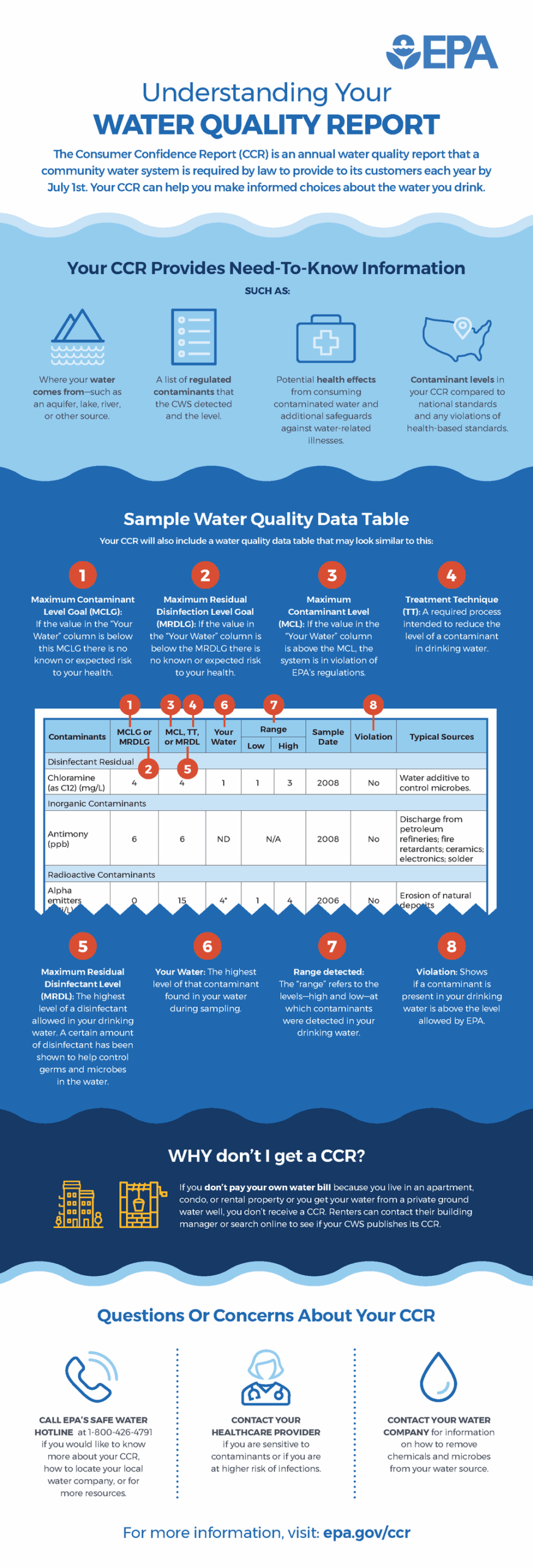
A Consumer Confidence Report (CCR) is an annual report that your water utility is required to send you (if you receive water from a public water system). The Environmental Protection Agency (EPA) mandates this report under the Safe Drinking Water Act.
This report includes:
- Source of your water (lake, river, aquifer, etc.)
- Detected contaminants and the levels found
- Health-based standards and whether your water met them
- Potential health effects of any contaminants found
- Information for vulnerable populations, such as pregnant women, children, and the immunocompromised
Water utilities typically mail this report once per year (often in July), but it’s also available online.
How to Find Your Local Water Quality Report
Here are three simple ways to access your CCR:
1. Search Online
Most utilities publish their CCR on their website. Search for:
“Water quality report [your city or water utility name]”
You may also find it linked under sections like “Water Quality,” “Consumer Confidence Report,” or “Drinking Water Report.”
2. Use the EPA’s CCR Lookup Tool
The EPA maintains an online search tool to help you locate reports by zip code or water system name.
🔗 Find your CCR here
3. Check Your Mail
By law, water systems must make the report accessible to customers, either by direct mailing or by providing a web link.
What to Look for in the Report
Water quality reports can be technical, but these are the key items to watch for:
🔹 Contaminants Detected
Look for entries like:
- Lead
- Chlorine or chloramine
- Trihalomethanes (THMs) – disinfection byproducts
- Nitrates/nitrites
- PFAS or PFOA/PFOS – “forever chemicals”
- Microbial contaminants (e.g. coliform bacteria)
- Volatile Organic Compounds (VOCs) and pesticides
Even if levels are “within legal limits,” that doesn’t mean they’re safe.
🔹 MCL vs. MCLG
- MCL (Maximum Contaminant Level): The legal limit set by the EPA
- MCLG (Maximum Contaminant Level Goal): The level at which no known or expected health risk occurs
Often, the MCLG is zero for contaminants like lead and arsenic—meaning there is no safe level. But your report may still show small amounts “allowed” under MCLs.
🔹 Violations
Did your system exceed the legal limits at any point during the year? If so, the report must disclose this and list potential health risks.
🔹 Notes for Vulnerable Groups
Pregnant women, infants, elderly individuals, and people with weakened immune systems are often more affected by contaminants—even at low levels.
Private Wells: What if You’re Not on City Water?
If your home uses a private well, you’re responsible for your own water testing. The EPA recommends annual testing for:
- Nitrates
- Coliform bacteria
- Total dissolved solids
- pH levels
- Arsenic (in some regions)
You can find certified labs in your state through your health department or by visiting:
🔗 EPA list of certified labs
What If You Find Something Concerning?
Many water reports reveal the presence of contaminants like:
- Lead: No safe level. Especially harmful to children’s brain development.
- PFAS: Linked to cancer, thyroid disorders, and reproductive issues.
- Chlorine byproducts (THMs): Associated with increased cancer risk.
- Pesticides or VOCs: Often originate from agricultural runoff or industrial waste.
Even when utilities meet federal standards, health experts often recommend stricter limits. The Environmental Working Group (EWG) publishes its own independent assessments, which are often more health-protective than EPA guidelines.
How to Protect Your Family: Filter What the Report Doesn’t Fix
Water treatment facilities do a good job—up to a point. But your water still travels through miles of aging pipes before it reaches your faucet. Along the way, it can pick up contaminants like lead, bacteria, and chemicals.
That’s why point-of-use filtration systems, like those made by Multipure, are essential.
Why Choose Multipure?
✅ NSF-Certified – Multipure filters are independently tested and certified to reduce a broad range of contaminants, including:
- Lead
- PFAS (PFOA and PFOS)
- Chlorine & chloramine
- Disinfection byproducts (like THMs)
- Pesticides & VOCs
- Pharmaceuticals
- Microplastics
✅ Health-Protective Filtration – Our filters meet or exceed EPA and NSF standards, offering protection beyond what city treatment provides.
✅ Trusted for Over 50 Years – We’ve been pioneers in water filtration since 1970, delivering safer, better-tasting water to families nationwide.
✅ Sustainable & Affordable – Save hundreds compared to bottled water and reduce single-use plastic waste.
Final Thoughts: Knowledge Is Power—Protection Is Peace of Mind
Understanding your water quality report is the first step toward making informed choices for your health. Even if your tap water looks fine, hidden contaminants could be a long-term risk.
With a Multipure drinking water system, you can confidently take control of your water quality—right at your kitchen sink.
👉 Explore Multipure filtration systems and experience cleaner, safer, better water—every single day.