The World’s Largest Freshwater System Faces New Challenges
The Great Lakes contain approximately 20% of the world’s surface freshwater and provide drinking water to more than 40 million people. For generations, they’ve been viewed as an endless supply of clean water.
But that perception is changing.
As artificial intelligence, cloud computing, and digital services expand, the Great Lakes region has become a prime location for new data centers. These facilities require enormous amounts of electricity—and many also require significant amounts of water for cooling.
At the same time, Great Lakes water levels continue their natural cycle of highs and lows, influenced by precipitation, evaporation, ice cover, and climate patterns. While data centers are not the primary cause of changing lake levels, their growing demand for water is raising important questions about how we manage one of North America’s most valuable natural resources.
Why Are Data Centers Being Built Near the Great Lakes?
Major technology companies are investing billions of dollars in new facilities throughout the Midwest because the region offers:
- Reliable electrical infrastructure
- Cooler average temperatures
- Access to fiber-optic networks
- Large tracts of available land
- Abundant freshwater resources
Communities in Indiana, Ohio, Illinois, Michigan, and Wisconsin are increasingly seeing proposals for large AI and cloud computing campuses.
How Much Water Does a Data Center Use?
The answer depends on its size and cooling system.
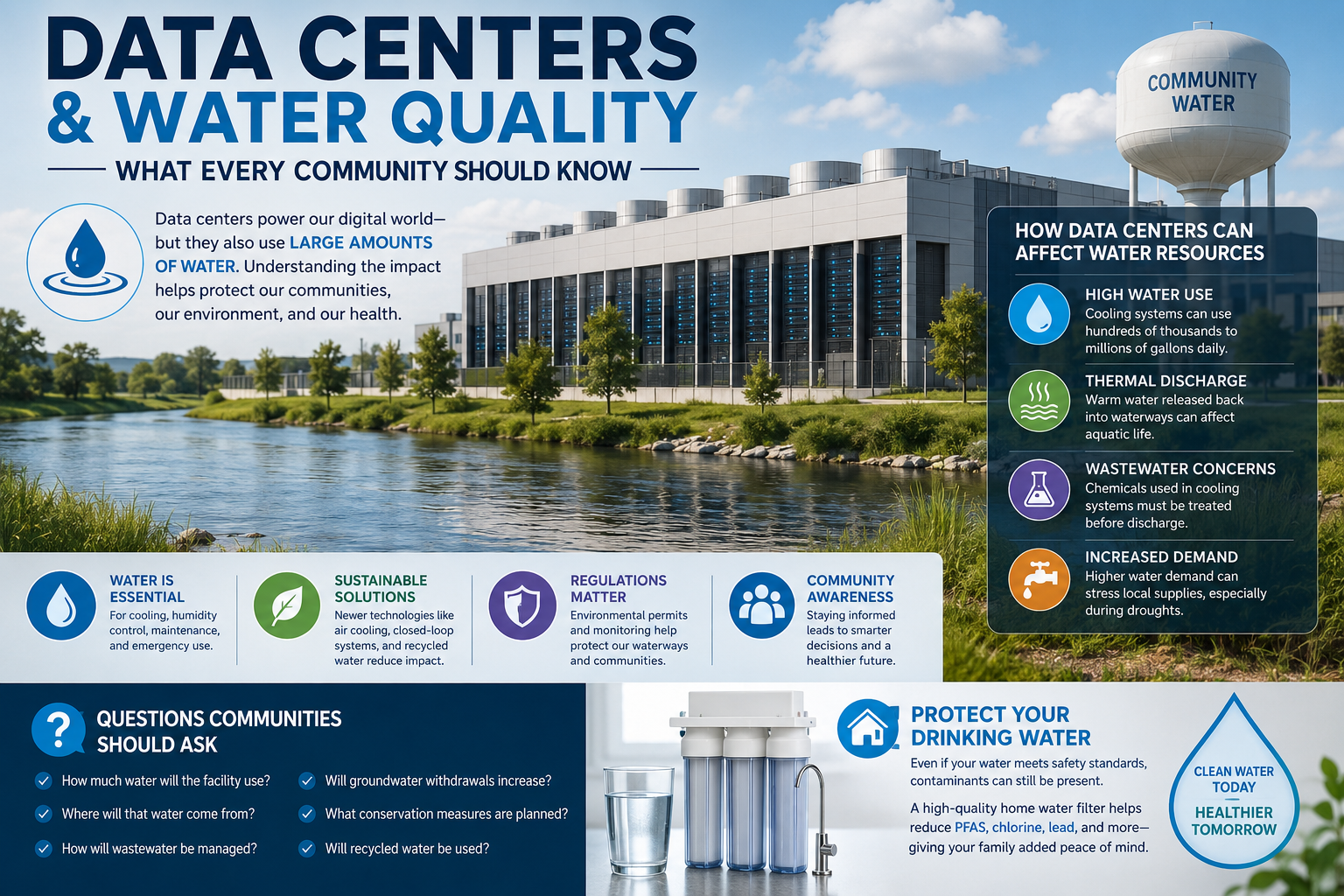
Some hyperscale data centers may use 1 to 5 million gallons of water per day when using evaporative cooling systems. Annually, that can exceed 365 million gallons, roughly equivalent to the yearly water use of about 12,000 Americans.
Not every facility consumes that much water. Some newer designs rely more heavily on air cooling or closed-loop systems that reduce water consumption. Even so, water use varies widely, and many experts are calling for greater transparency so communities understand the true impact before projects are approved.
Are Data Centers Lowering Great Lakes Water Levels?
The simple answer is no—not directly.
Great Lakes water levels have always fluctuated because of:
- Seasonal precipitation
- Snowpack
- Evaporation
- Ice cover
- Temperature changes
- Water flowing into and out of the lakes
Recent declines follow several years of unusually high water levels and are largely explained by natural hydrologic cycles combined with warmer conditions that increase evaporation.
However, that doesn’t mean water consumption is irrelevant.
Many environmental organizations and water policy experts warn that increasing numbers of water-intensive industries—including data centers—could place additional stress on local water systems, municipal infrastructure, groundwater, and smaller watersheds, particularly during droughts or periods of peak demand.
Why Communities Are Asking More Questions
Several concerns continue to emerge across the Great Lakes region:
- How much municipal water will each facility consume?
- Will local residents pay higher water rates?
- Can existing treatment plants handle increased demand?
- What happens during drought conditions?
- Should companies disclose their expected water use before receiving approvals?
Many organizations argue that current reporting requirements are insufficient because facilities purchasing water from municipal systems often are not required to publicly report their total water consumption.
What Does This Mean for Indiana?
Indiana sits within the Great Lakes watershed through Lake Michigan and is already seeing increased interest in data center development.
As these projects expand, local governments will need to balance economic development with responsible stewardship of water resources.
Questions that deserve careful consideration include:
- Can water infrastructure support future growth?
- Are conservation measures being implemented?
- Are companies using the most water-efficient cooling technologies?
- How will additional demand affect long-term water quality?
These are planning questions rather than reasons for alarm, but they’re becoming increasingly important as digital infrastructure grows.
What Homeowners Can Do
Large-scale water management may seem beyond an individual homeowner’s control, but protecting the quality of your drinking water starts at home.
Consider:
- Reviewing your local Consumer Confidence Report each year
- Testing your home’s water if you use a private well
- Using a certified drinking water filtration system for contaminants of concern
- Staying informed about local development and water infrastructure projects
Clean water depends on both protecting our shared resources and ensuring the water entering our homes is treated for the contaminants that matter most.
Final Thoughts
The Great Lakes remain one of the world’s greatest freshwater resources, but they are not unlimited. Climate change, population growth, industrial expansion, and rapidly increasing demand from AI-powered data centers all make thoughtful water management more important than ever.
The conversation isn’t about choosing between technology and clean water. It’s about ensuring innovation grows alongside responsible planning, transparent reporting, and sustainable water use.
For homeowners, one thing remains constant: protecting your family’s drinking water starts with understanding where it comes from—and making informed choices about how you filter it.
Concerned about what’s in your drinking water?
At Indiana Water Filters, we help Indiana families understand their local water quality and choose certified filtration systems that reduce contaminants while improving taste and peace of mind. Contact us today to find the right solution for your home.