When you turn on the kitchen faucet, you probably aren’t thinking about federal environmental policy.
You’re thinking about getting a glass of water.
But behind that glass is a complicated system of treatment plants, pipes, testing, infrastructure, regulations and public funding.
And that is why changes at the U.S. Environmental Protection Agency (EPA) can eventually matter to homeowners—even if you never read an EPA announcement.
What’s Changing at the EPA?
The EPA is changing how it approaches water infrastructure funding and federal-state responsibilities.
For fiscal year 2026, EPA announced $7.2 billion in Clean Water and Drinking Water State Revolving Fund allotments. At the same time, the agency has emphasized shifting more responsibility for infrastructure funding toward states and relying more heavily on the revolving-fund structure.
That doesn’t mean federal water funding has disappeared.
In fact, EPA continues to announce significant investments in drinking-water infrastructure, lead-service-line replacement and programs addressing emerging contaminants.
The important question for homeowners is what these changes mean locally.
Why Federal Water Funding Matters
Water infrastructure is expensive.
Communities need funding to repair or replace:
- Aging water mains
- Treatment equipment
- Storage systems
- Pump stations
- Lead service lines
- Water-monitoring equipment
- Other components of public water systems
The Drinking Water State Revolving Fund helps states finance projects needed to maintain or improve drinking-water infrastructure. Indiana administers its own DWSRF program through the Indiana Finance Authority.
When federal priorities or funding structures change, states and local communities have to determine how best to use the money available to them.
What Does This Have to Do With Your Faucet?
Your water may be treated at a municipal facility, but it still has to travel through miles of infrastructure before reaching your home.
And the condition of that infrastructure matters.
A water system can produce properly treated water at the plant, but aging distribution infrastructure and household plumbing can introduce additional concerns.
That’s particularly important for older homes.
Lead Is One Example
In May 2026, EPA announced nearly $2.9 billion in funding for states to identify and replace lead service lines. The funding can support identifying lead pipes, planning replacement projects and replacing those lines.
For homeowners, that raises an important question:
Do you know what type of service line connects your home to the water system?
If you don’t, it may be worth finding out.
Does EPA Funding Mean Your Water Is Safe—or Unsafe?
Neither conclusion is automatic.
EPA and state drinking-water programs establish standards and provide funding and oversight, but water quality is ultimately experienced at the local level.
Two households in different communities can have very different water-quality concerns.
That’s why national headlines should be a starting point—not the final answer.
What Indiana Homeowners Can Do
You don’t have to become a water-policy expert.
Start with three things:
1. Find your annual water-quality report.
If you’re connected to a public water system, review the report and see what contaminants are tested for and reported.
2. Find out whether you have an older service line.
If you’re in an older home, contact your water utility or local officials to find out whether information is available about your service line.
3. Consider testing your home’s water.
Your home’s plumbing can be different from your neighbor’s plumbing. A test can provide information specific to your household.
The Takeaway
Changes at the EPA don’t mean homeowners should automatically assume their tap water is unsafe.
But they are a good reminder that water quality is something worth paying attention to.
Federal agencies, states and local utilities all play a role.
So do homeowners.
Knowing where your water comes from, understanding your plumbing and knowing which contaminants may be relevant to your area can help you make more informed decisions about the water your family drinks.
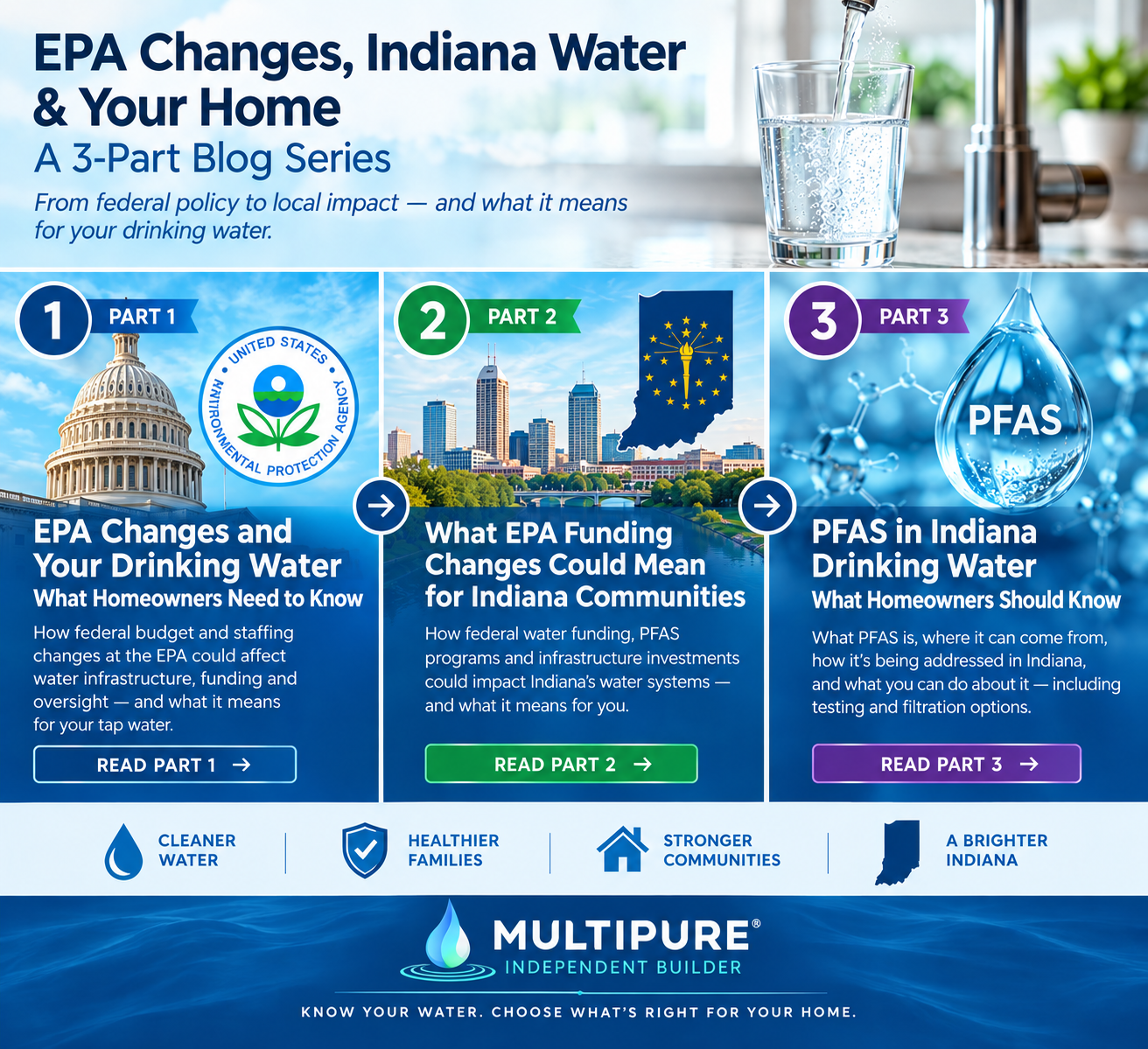
Next in the series: We’ll look specifically at Indiana—and how federal water funding, PFAS programs and infrastructure investments could affect communities across the state.