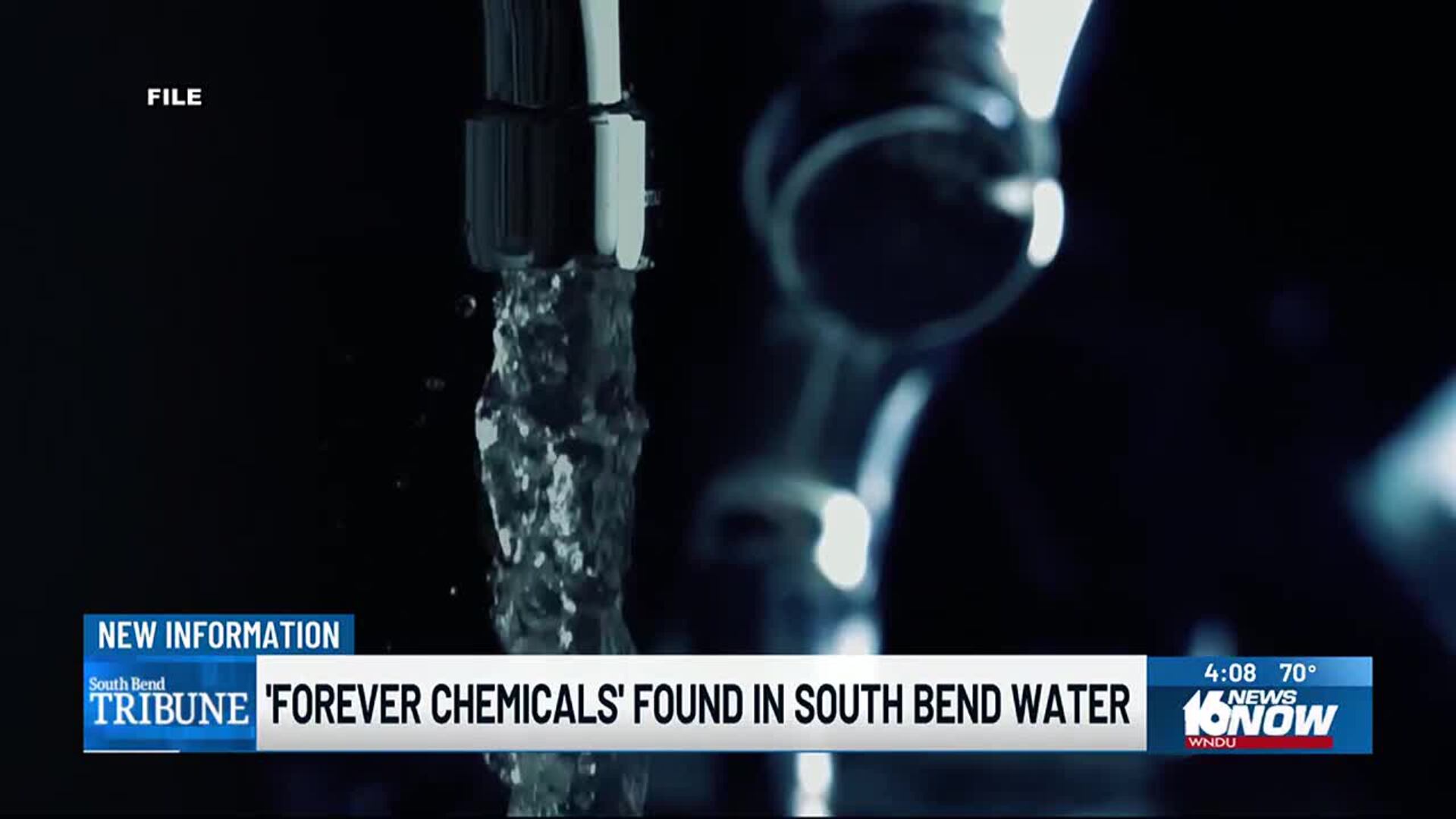

Recently, South Bend’s drinking water has come under scrutiny due to elevated levels of PFAS—often called “forever chemicals”—which have been detected at 1.3 times the allowable limits set by the EPA.
PFAS are long-lasting compounds found in everything from cookware and food packaging to clothing and electronics. The name “forever chemicals” stems from their resilience in the environment and human body
Studies link them to serious health issues—cancers (kidney, testicular, ovarian, leukemia), immune suppression, thyroid dysfunction, liver damage, reproductive issues, and more.
Locally, Professor Graham Peaslee from Notre Dame emphasizes that even small amounts pose health risks, “there shouldn’t be any PFAS in our water… it’s in everybody’s blood”
What’s the City Doing?
South Bend isn’t sitting idly by. The city has:
- Reduced or shut down wells with high PFAS levels, running them only when absolutely required https://www.wndu.com.
- Committed $17 million to upgrade water treatment infrastructure—starting with the North Pumping Station ($15.5M project), with funding partly sourced from a class-action settlement against 3M wvpe.org.
- Accepted a timeline extension (from federal rules) to meet future limits—although city officials say they’re on track regardless wvpe.org.
Nationwide Context: PFAS Regulations
On the national stage, the EPA introduced enforceable PFAS limits in 2024, capping PFOA and PFOS at 4 parts per trillion, with other PFAS compounds also regulated. These standards aim for compliance by 2029—utilities must start monitoring by 2027 ReutersPeople.com The Washington PostHealth.
This landmark move is expected to shield around 100 million Americans and is supported by billions in federal infrastructure funding Reuters People.com.
Why Multipure Stands Out
Multipure’s Aqualuxe and Aquaperform systems use solid carbon block filtration certified by NSF to reduce PFOS and PFOA and other harmful PFAS multipure.com multipure-see.com. This means you’re not just relying on marketing—but independent validation that PFAS are being captured.
Additional benefits of Multipure’s filters include:
- No wasted water or electricity
- Retention of beneficial trace minerals
- Durability and ease of cartridge replacement multipure-see.com
As Multipure notes: “Unless they are certified a globally recognized third party like NSF, saying they can reduce PFAS… independent testing are not always reliable” multipure.com.
Why It Matters & What You Can Do
With PFAS turned up in local drinking water, home filtration is vital, especially while municipal upgrades roll out and federal standards are fully enforced.
Tips for Residents:
- Look for NSF-certified filters specifically targeting PFAS (like Multipure Aqualuxe or Aquaperform).
- Consider other proven options such as reverse osmosis, granular activated carbon, or ion-exchange systems—but check for certifications https://www.wndu.com multipure.com.
- Monitor updates from South Bend Water Works and the EPA for progress on infrastructure improvements and PFAS levels.
Summary
| Issue | What’s Happening |
|---|---|
| PFAS in South Bend water | Detected at 1.3× federal limits—health risks are significant |
| City response | Discontinuing use of contaminated wells; investing ~$17M in treatment upgrades |
| National regulation | EPA enforcing limits (e.g., PFOA/PFOS ≤4 ppt), utilities to comply by 2029 |
| Multipure filters | NSF-certified systems (Aqualuxe, Aquaperform) effective for PFAS removal |
| Resident action | Use certified filters and stay informed on water improvements |
Further reading on PFAS regulation

US sets first standard to curb ‘forever chemicals’ from drinking water

U.S. Limits ‘Forever Chemicals’ in Drinking Water for First Time
Sources