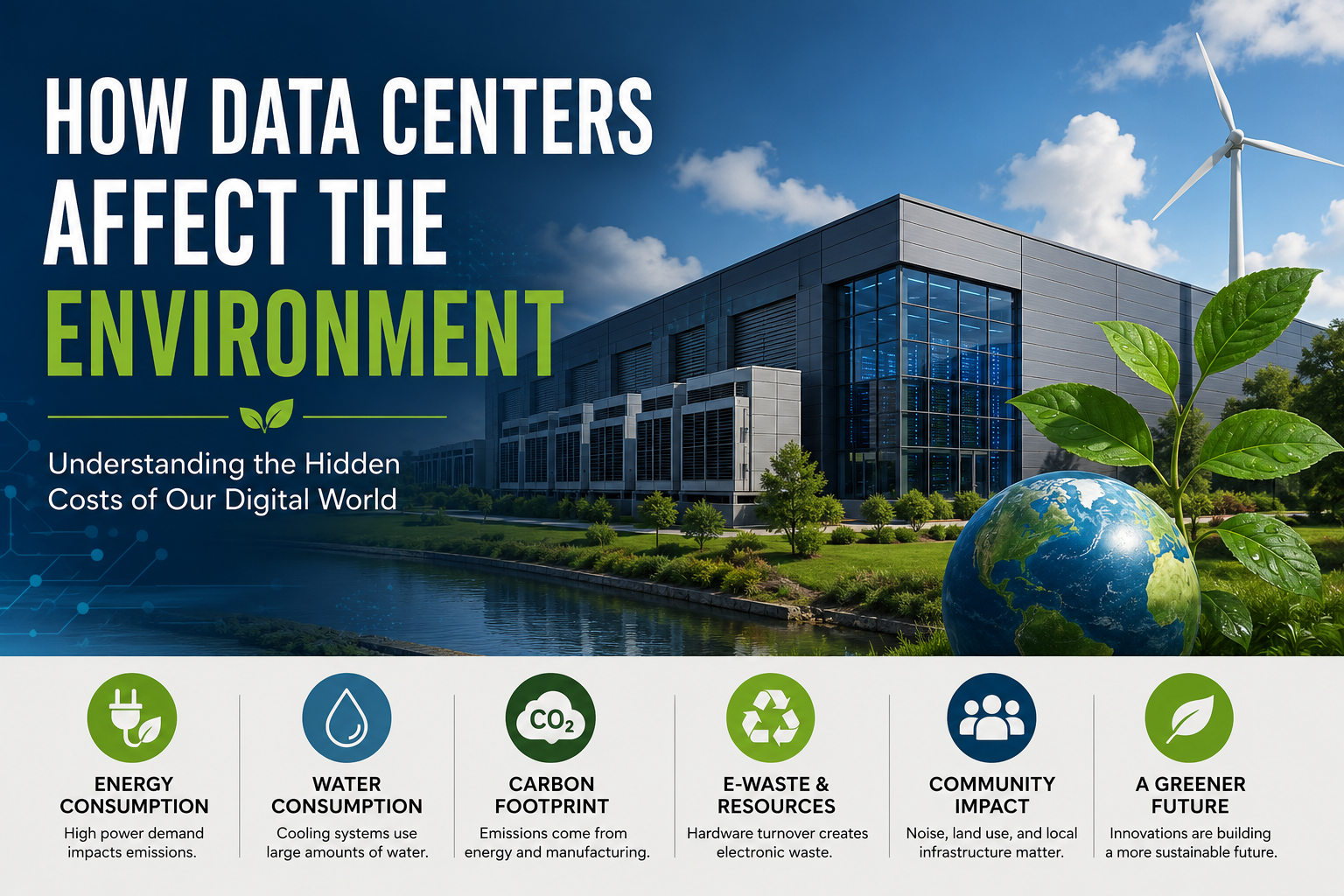
Every email you send, movie you stream, online purchase you make, and AI tool you use depends on one thing: data centers.
These massive facilities are the backbone of our connected world, storing and processing enormous amounts of information every second. As demand for cloud computing and artificial intelligence continues to grow, so does the number and size of data centers being built across the United States.
While data centers bring jobs, technological innovation, and economic investment, they also have environmental impacts that communities should understand. The challenge is finding ways to support digital growth while protecting natural resources.
What Is a Data Center?
A data center is a highly secure building that houses thousands—or even hundreds of thousands—of computer servers. These servers operate 24 hours a day, processing everything from banking transactions and online shopping to video streaming and artificial intelligence.
Because servers generate significant heat, data centers require extensive cooling systems and a constant supply of electricity to operate reliably.
Energy Consumption
One of the largest environmental concerns surrounding data centers is electricity use.
Modern facilities consume tremendous amounts of power to keep servers running and maintain optimal temperatures. In many regions, data centers are among the largest industrial electricity users.
The environmental impact depends largely on how that electricity is generated.
When electricity comes from renewable sources such as wind, solar, or hydroelectric power, greenhouse gas emissions are significantly lower. However, facilities powered by coal or natural gas contribute more to carbon emissions.
Many technology companies are investing heavily in renewable energy projects and purchasing clean energy to offset their electricity use, but the transition varies by region.
Water Consumption
Keeping thousands of servers cool often requires large amounts of water.
Many data centers use evaporative cooling systems, which can consume hundreds of thousands to millions of gallons of water each day depending on the facility’s size, climate, and cooling technology.
This increased demand can place additional pressure on:
- Municipal water systems
- Rivers and reservoirs
- Groundwater supplies
- Local infrastructure
In areas already experiencing drought or rapid population growth, water availability has become one of the most important considerations when approving new data center projects.
Some newer facilities are adopting advanced air-cooling systems or closed-loop cooling technologies that dramatically reduce water consumption.
Carbon Footprint
Although data centers themselves don’t produce vehicle-like exhaust emissions, they contribute indirectly through electricity generation and the manufacturing of servers and equipment.
Environmental impacts include:
- Greenhouse gas emissions
- Manufacturing impacts from electronic equipment
- Transportation emissions during construction
- Backup diesel generator emissions during testing or power outages
Fortunately, improvements in energy efficiency have made today’s servers significantly more efficient than those built a decade ago.
Electronic Waste
Technology evolves rapidly.
Servers are typically replaced every few years as faster, more energy-efficient hardware becomes available.
Older equipment must be recycled or disposed of properly to prevent hazardous materials from entering landfills.
Responsible recycling programs recover valuable metals while reducing environmental waste.
Land Use and Construction
Large data centers often require hundreds of acres of land for buildings, electrical infrastructure, parking areas, and future expansion.
Construction may affect:
- Wildlife habitat
- Stormwater runoff
- Soil disturbance
- Local ecosystems
Responsible site planning can minimize many of these impacts through conservation areas, stormwater management, and sustainable landscaping.
Noise and Local Communities
While data centers are relatively quiet compared to manufacturing plants, they often use large cooling fans and backup generators.
Nearby residents may notice:
- Continuous fan noise
- Occasional generator testing
- Increased construction traffic during development
Modern facilities increasingly incorporate sound barriers and quieter cooling technologies to reduce these impacts.
Positive Environmental Developments
Not all environmental news surrounding data centers is negative.
Many companies are investing in technologies that reduce their environmental footprint, including:
- Renewable energy
- Water recycling systems
- Energy-efficient server hardware
- Artificial intelligence to optimize cooling
- Waste heat recovery
- Sustainable building certifications
These innovations continue to improve as demand for digital services grows.
What This Means for Your Community
If a new data center is proposed near your community, it’s worth asking questions such as:
- Where will the electricity come from?
- How much water will the facility use?
- Will recycled water be utilized?
- How will stormwater be managed?
- What measures are in place to reduce noise and emissions?
- How will local infrastructure be affected?
Well-planned facilities can bring economic benefits while minimizing environmental impacts through thoughtful design and responsible resource management.
Why Water Quality Still Matters at Home
Even if your local water utility meets all regulatory standards, increasing industrial demand on water resources highlights the importance of protecting your home’s drinking water.
Municipal treatment plants are designed to produce safe water, but contaminants such as chlorine, disinfection byproducts, lead from older plumbing, and emerging contaminants like PFAS may still be present at low levels.
A high-quality home water filtration system provides an additional layer of protection, giving families greater confidence in the water they drink every day.
Final Thoughts
Our digital world depends on data centers, and their importance will only continue to grow. Like any major infrastructure, they come with environmental tradeoffs.
By investing in cleaner energy, improving water efficiency, recycling equipment, and supporting sustainable development, the technology industry can continue expanding while reducing its environmental impact.
As consumers and community members, staying informed allows us to support innovation while encouraging responsible stewardship of the natural resources we all depend on.