
Why Activism and Water Filters Matter for Your Family’s Health
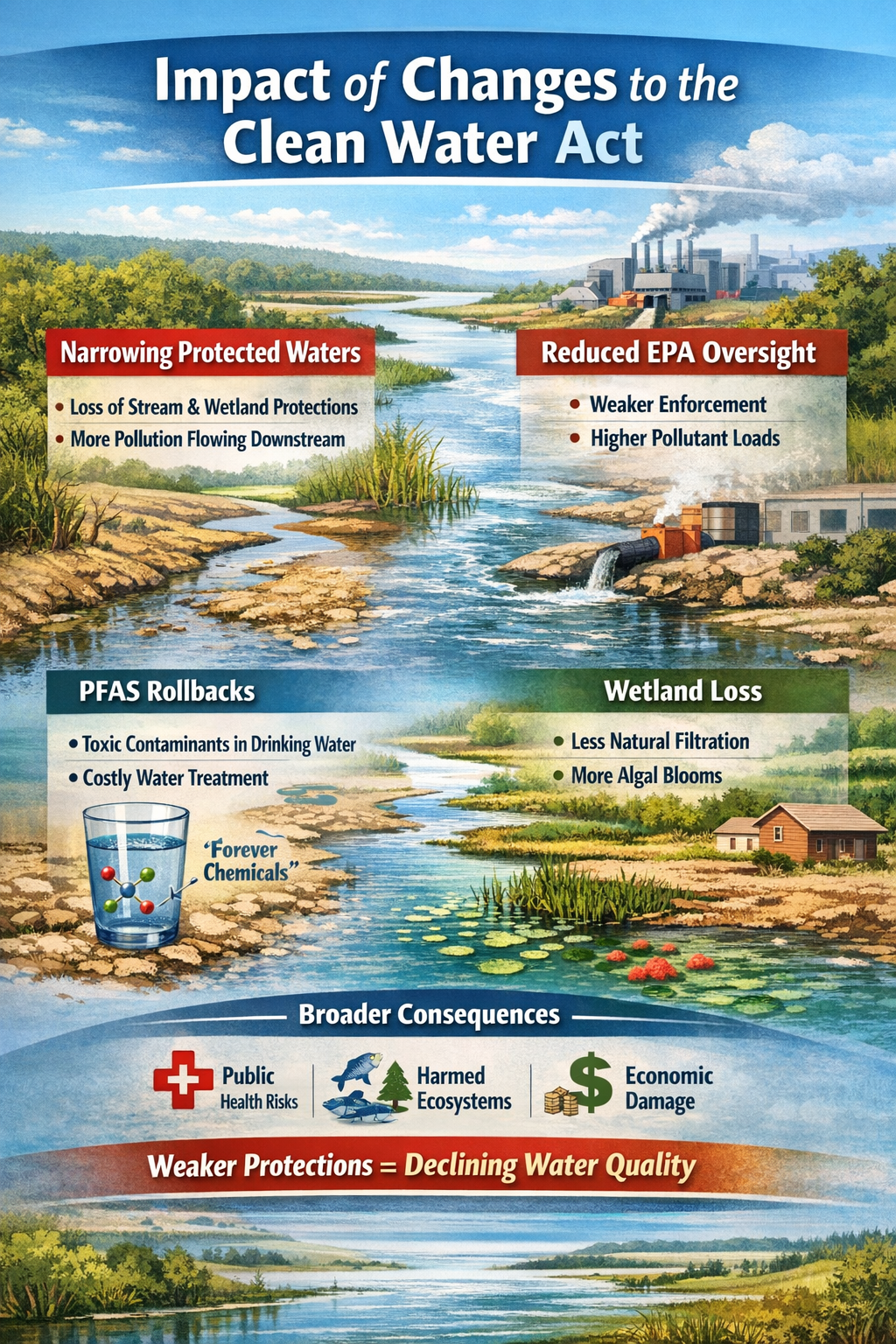
With recent changes to the Clean Water Act (CWA) narrowing which waters are protected and limiting federal oversight, many Americans are wondering: What does this mean for my drinking water—and what can I do about it?
The truth is this: policy shapes water quality upstream, but your choices shape water quality at your tap. You can (and should) do both—advocate for stronger protections and take practical steps to protect your household.
🌊 Why This Matters Now
The Clean Water Act was our most powerful safeguard against pollution in streams, wetlands, and rivers that feed drinking water sources. But recent regulatory rollbacks have left many smaller waterways—and the ecosystems they support—vulnerable to pollution.
This doesn’t mean water systems are failing today. But it does mean:
- More contaminants may enter source water
- Municipal treatment systems face greater challenges
- Consumers need additional safeguards like filters
In short: if laws that prevent pollution are weaker, we need stronger action—both socially and personally.
📣 Activism Is Essential
Water pollution doesn’t happen in a vacuum. You can take action that:
- Supports science-based protections for all waterways
- Holds polluters accountable, not taxpayers
- Expands monitoring of unregulated contaminants like PFAS
- Funds upgrades to aging infrastructure
Ways to engage:
✅ Contact your elected officials about Clean Water Act protections
✅ Join or support local watershed groups
✅ Attend town halls on water quality
✅ Organize letter-writing campaigns to the EPA and state agencies
✅ Support environmental justice initiatives
Your voice makes a difference. Public pressure has reversed rollbacks before—and it can again.
💧 Why a Water Filter Helps (and What It Can Do)
While activism works toward long-term change, water filters are an immediate way to protect your family from contaminants that may slip through regulatory gaps.
Municipal treatment systems are good—but they’re not perfect. Filters can help remove:
✔ Lead
✔ PFAS (“forever chemicals”)
✔ Chlorine and taste/odor issues
✔ Pesticides and herbicides
✔ Sediment and particulates
Not all filters are equal. Let’s break down common types and compare real products.
🧠 Filter Types: What You Should Know
🔹 1. Activated Carbon Filters
Best for: chlorine, taste/odor, some organic chemicals
How they work: carbon media adsorbs contaminants
Good for daily drinking water protection
🔹 2. Reverse Osmosis (RO) Systems
Best for: broad contaminant reduction including dissolved solids
How they work: forces water through a semipermeable membrane
High effectiveness, but can be slower and waste some water
🔹 3. Pitcher/Under-Sink Filters
Best for: basic contaminant reduction and improved taste
Easy setup, lower cost, but limited range compared to RO
🔹 4. Whole-House Filters
Best for: treating all incoming water for your home
Expensive upfront, protects appliances and bathing water too
🏆 Product Comparisons (Including Multipure)
Here’s a consumer-oriented comparison of popular water filters:
| Category | Recommended For | Pros | Cons |
|---|---|---|---|
| Multipure Aquaperform (MP750) | Everyday drinking water | High-performance carbon block; reduces lead, VOCs, chlorine, select PFAS | Needs regular filter changes |
| Multipure® MP204 (Dual Faucet) | Kitchen sink faucet attachment | Affordable; easy install | Not as comprehensive as RO |
| Reverse Osmosis System (e.g., APEC or iSpring) | Maximum contaminant removal | Removes many dissolved contaminants, including arsenic/nitrates | Higher cost + installation |
| Big Berkey (Gravity Filter) | Portable, no plumbing | No electricity needed; broad removal | Replacement filters required; slower than plumbed systems |
| Whole-House Carbon + Sediment System | All water entering home | Protects appliances and skin contact | Most expensive; professional install |
Why Multipure?
Multipure’s carbon block technology offers effective reduction of a wide range of contaminants with fewer flow issues than some competitors. Their systems are solid for everyday protection—especially where municipal treatment is stressing under new regulatory gaps.
🛠️ Tips for Choosing the Right Filter
📍 Check your local water quality report.
Most utilities publish Annual Water Quality Reports (Consumer Confidence Reports). These help you match a filter to your water’s specific issues.
📍 Look for NSF/ANSI certifications.
Certifications mean independent testing for performance claims like lead and chlorine reduction.
📍 Factor in maintenance.
Filters need regular cartridge changes. Budget for replacement filters.
📍 Consider your household needs.
Families with children, pregnant individuals, or immunocompromised members may want more comprehensive systems.
✨ Final Thoughts
The Clean Water Act is meant to protect our water at the source—but when protections weaken, responsibility doesn’t fall to just one entity. It falls to all of us.
✔ Advocate for strong protections
✔ Hold polluters and policymakers accountable
✔ Equip your home with effective water filtration
Together, we can safeguard both policy and personal health—because access to clean, safe water isn’t just technical, it’s a right.