
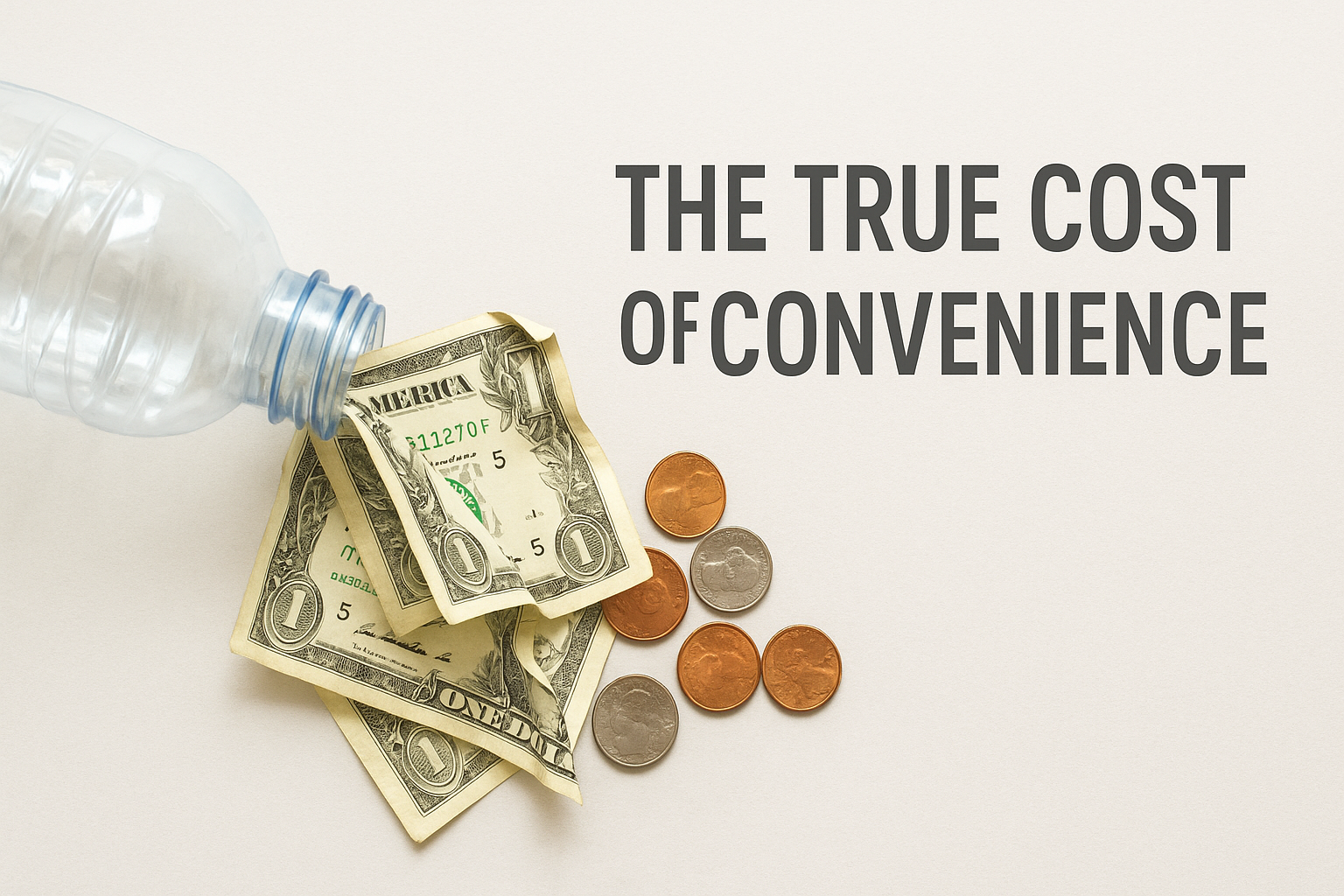
Grabbing a bottle of water seems harmless. It’s quick, convenient, and feels like a small expense. But behind that simple purchase is a much bigger story — one that affects your wallet, your community, and even global access to clean water.
Let’s uncover the real price we all pay for the world’s most successful marketing illusion.
🧾 1. Paying Thousands for Tap Water in Disguise
It’s no secret that bottled water is expensive — but how expensive might surprise you.
A gallon of bottled water can cost up to 2,000 times more than tap water.
Most bottled brands are simply filtered municipal water, meaning you’re paying premium prices for something that already flows from your kitchen faucet.
💧 Average annual cost of bottled water per person: $400–$600
💧 Average annual cost of filtered tap water: less than $1
When you add in packaging, shipping, and brand markups, bottled water becomes one of the most overpriced products on the planet.
🏦 2. The Hidden Costs You Don’t See
The true cost of bottled water extends far beyond your grocery bill.
Every bottle represents:
- Oil used in production (over 17 million barrels annually)
- Emissions from transportation
- Waste management costs for non-recycled bottles
- Environmental cleanup for plastic pollution
These hidden costs are absorbed by taxpayers, local governments, and future generations — not the corporations profiting from the sales.
🧃 3. The Convenience Trap
The bottled water industry thrives on one powerful message: convenience.
But convenience comes with consequences.
Each time you buy bottled water:
- You’re reinforcing single-use plastic culture
- You’re funding companies that privatize public water sources
- You’re contributing to the depletion of local aquifers
In many regions, corporations extract water from rural communities at minimal cost, only to sell it back to consumers at enormous markups — often leaving nearby residents facing shortages or contamination.
💧 4. The Ethical and Environmental Ripple
Behind every bottle is a global ripple effect:
- Water privatization in vulnerable communities
- Plastic pollution impacting marine ecosystems
- Carbon emissions from production and transport
The more we depend on bottled water, the further we move from sustainable solutions that protect public health and our shared natural resources.
🔄 5. The Smarter Alternative: Clean, Affordable, Filtered Water
You don’t need to sacrifice safety or convenience to make a better choice.
With a Multipure home filtration system, you can enjoy:
✅ Crystal-clear, great-tasting water
✅ Certified contaminant reduction (including lead, chlorine, and microplastics)
✅ A lifetime of savings and sustainability
A single filter can replace thousands of plastic bottles each year — saving you money and protecting the environment at the same time.
Discover your perfect filtration system →
🌿 The Bottom Line
Bottled water might seem like a small expense, but the costs — financial, environmental, and ethical — are enormous.
By switching to filtered tap water, you gain true convenience, save money, and help ensure that clean water remains a basic human right, not a bottled commodity.
Next in the Series:
➡️ “Better Alternatives: Clean Water Without the Waste”
One thought on “💸 The True Cost of Convenience: How Bottled Water Drains Your Wallet and the Planet”
Comments are closed.