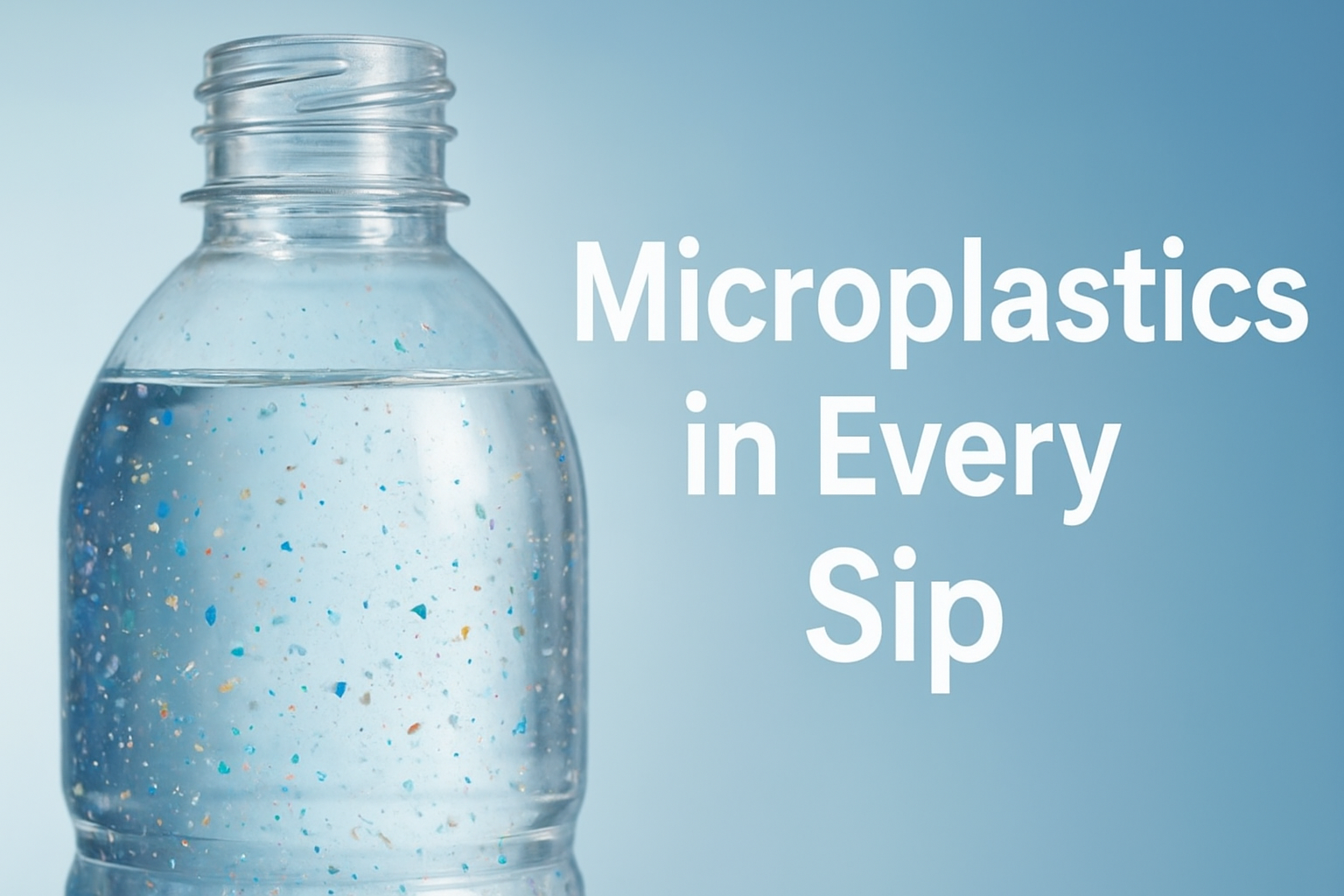
When you crack open a cold bottle of water, you expect it to be clean, refreshing, and safe. But what if that crystal-clear liquid isn’t as pure as it looks? Recent studies have revealed a shocking truth — bottled water can contain tens of thousands of microscopic plastic particles per liter.
You can’t see them. You can’t taste them.
But they’re there — and they’re making their way into your body.
🧫 1. What Are Microplastics?
Microplastics are tiny plastic fragments less than 5 millimeters long, created as larger plastics break down.
They come from:
- Bottles and caps shedding particles during production and transport
- Heat exposure (like sitting in a hot car)
- Environmental contamination from plastic waste
Even before you open that bottle, it may already be full of invisible debris.
🧪 2. What Research Shows
In one groundbreaking study, scientists discovered that bottled water contained up to 100 times more microplastics than previously estimated — often double the levels found in tap water.
These particles aren’t harmless. They can carry:
- Toxic chemicals (like BPA and phthalates)
- Heavy metals
- Bacteria and pollutants that cling to their surfaces
Once ingested, microplastics can accumulate in the body, potentially causing inflammation and disrupting hormones.
🫀 3. The Hidden Health Risks
While research is still ongoing, early findings link microplastic exposure to:
- Endocrine (hormone) disruption
- Fertility and developmental issues
- Inflammation and immune response problems
- Potential cardiovascular and digestive impacts
The concern isn’t just about what’s in the water today — it’s about the long-term effects of constant, low-level exposure.
🔥 4. Heat Makes It Worse
Leaving bottled water in your car, garage, or even under sunlight can dramatically increase microplastic release.
As plastic warms, it sheds more fragments and releases chemical additives into the water.
That means a “refreshing” drink after a hot day might contain thousands of tiny plastic pieces — and that’s before you factor in the bottle cap!
💧 5. The Safer Alternative: Filtered Tap Water
You don’t have to accept microplastics as part of your daily hydration.
High-quality home filtration systems like Multipure’s NSF-certified filters are proven to reduce microplastic particles and chemical contaminants, giving you cleaner, healthier water straight from your tap.
✅ Removes physical and chemical contaminants
✅ Saves money over time
✅ Eliminates plastic waste
Learn how Multipure’s filtration works →
🌿 6. Protecting Yourself — and the Planet
By skipping bottled water and investing in sustainable filtration, you’re not only protecting your health — you’re also reducing the plastic pollution that feeds this global problem.
Every refillable bottle and filtered glass you drink helps keep microplastics out of our bodies, our rivers, and Indiana’s waterways.
The Bottom Line
Microplastics aren’t a far-off problem—they’re in your next sip.
But you don’t need to live with them. With the right filtration, you can enjoy truly clean, sustainable water that’s safe for you and your family.
Next in the Series:
➡️ “The Environmental Toll of Bottled Water: Where All That Plastic Really Goes”