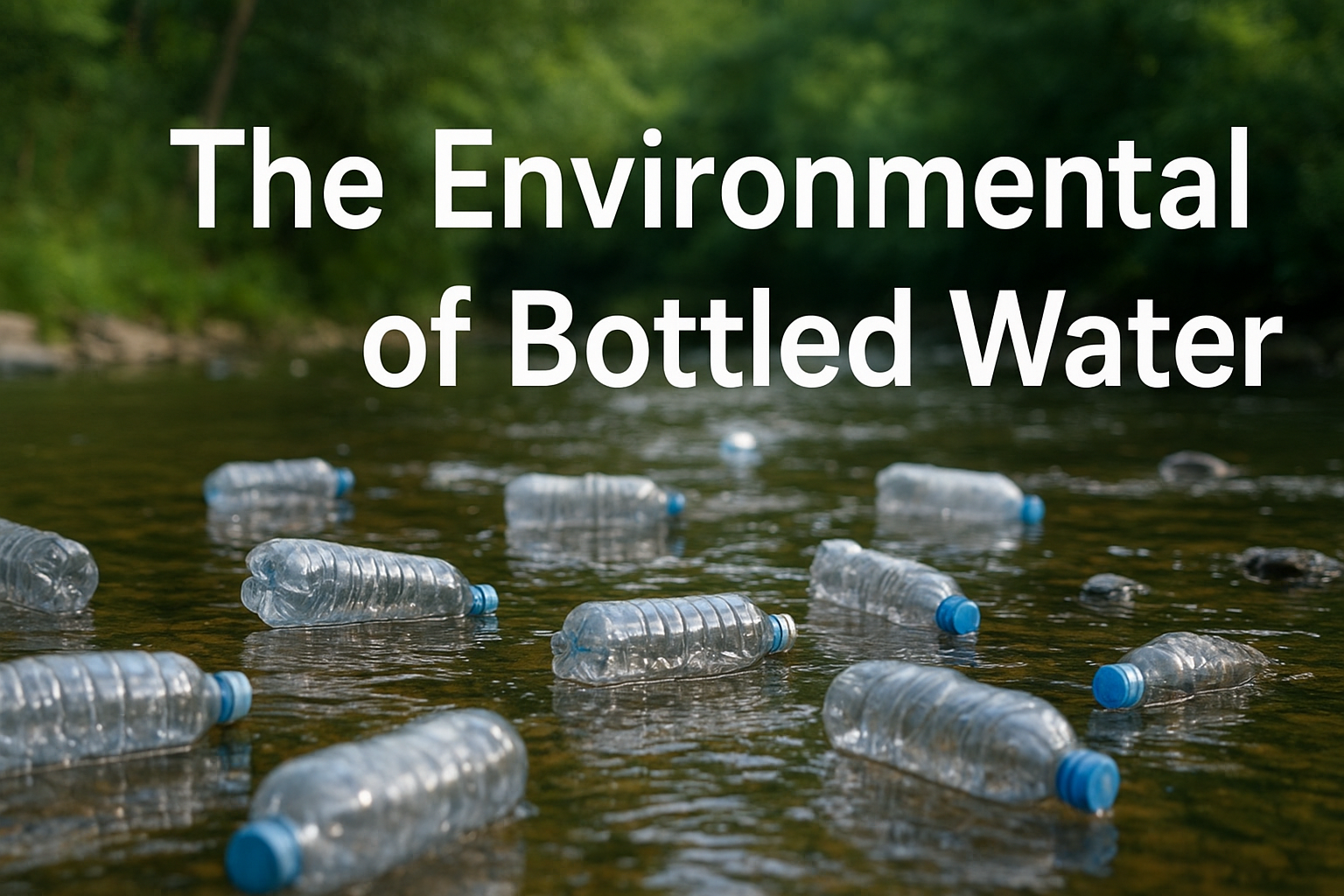
It’s easy to grab a bottle of water on the go. It’s cold, convenient, and everywhere. But what happens after you toss it in the bin—or worse, when it doesn’t make it to one?
Behind every bottle of water is a massive environmental cost, one that begins long before you take your first sip and lingers for hundreds of years after.
🏭 1. Plastic Production Starts with Oil
Every plastic bottle starts as petroleum, a fossil fuel that must be drilled, refined, and processed.
Producing plastic for bottled water:
- Consumes 17 million barrels of oil annually in the U.S. alone
- Releases millions of tons of carbon emissions
- Uses trillions of gallons of freshwater during manufacturing
That’s right—water is wasted just to make containers for more water.
🚛 2. The Carbon Footprint Adds Up
From bottling plants to trucks and retail shelves, bottled water travels long distances before reaching your hand.
Each step burns fossil fuels and pumps greenhouse gases into the atmosphere. Studies estimate the bottled water industry’s total carbon footprint at over 2.5 million tons of CO₂ annually—and growing.
If you drink bottled water daily, your personal carbon footprint could be hundreds of pounds of emissions each year, just from hydration.
🧴 3. Where All Those Bottles End Up
Americans use around 50 billion plastic water bottles every year, but only 9% are recycled.
The rest?
- Landfills, where they take 450+ years to decompose
- Incinerators, releasing toxic fumes
- Waterways, where they break down into microplastics
In Indiana, discarded bottles often end up in ditches, rivers, and lakes, eventually flowing into the Ohio River and Great Lakes—a cycle of pollution that comes right back into our drinking water.
🐟 4. Wildlife Pays the Price
From fish to birds to livestock, animals mistake small plastic fragments for food. These plastics block digestion, introduce toxins, and devastate ecosystems.
Researchers have found microplastics in:
- Fish and mussels caught in Lake Michigan
- Soil and crops fertilized with sewage sludge containing plastic waste
- Even rainfall, meaning plastics are now part of the water cycle itself
🔁 5. Breaking the Cycle: Reuse and Refill
The simplest way to reduce plastic pollution is to stop it at the source.
By switching to filtered tap water and reusable bottles, every family can prevent thousands of plastic bottles from entering landfills and waterways each year.
With Multipure’s NSF-certified filtration systems, you get:
- Cleaner, safer water straight from your tap
- Zero plastic waste
- Lower lifetime costs than bottled water
Explore eco-friendly water filtration options →
🌿 The Bottom Line
Bottled water doesn’t just waste your money—it wastes our planet’s resources.
From oil fields to oceans, its impact is everywhere. But with one simple switch to home filtration, you can help protect Indiana’s waterways, reduce pollution, and make a lasting difference.
Next in the Series:
➡️ “The True Cost of Convenience: How Bottled Water Drains Your Wallet and the Planet”